Your deck looked perfect five years ago. Now you’re noticing loose boards, wobbly railings, and wood that’s seen better days. You’re wondering what it’ll cost to fix things up or whether you should start over completely.
The numbers vary widely depending on what you’re dealing with. A few simple repairs might run a couple hundred dollars, while a full deck replacement can easily reach $15,000 or more for an average-sized outdoor space.
What Drives Deck Repair Cost in 2026
Labor costs have climbed steadily over the past few years. Skilled carpenters charge between $50 and $100 per hour in most areas, and deck work requires specific carpentry skills that command premium rates. Material costs fluctuate too, influenced by lumber market conditions and supply chain factors.
The size of your existing deck plays an obvious role. Pricing typically breaks down per square foot, though some deck contractors quote by linear foot for railings or stairs. Permit fees add to project costs in many municipalities. Your local building department determines whether repairs need permits, and regulations vary considerably across different jurisdictions.
Common Deck Repairs and Their Price Tags
Most repairs fall into predictable categories, each with typical cost ranges.
Replacing damaged boards represents the most frequent repair. A single deck board costs anywhere from $3 to $8 per square foot installed, depending on whether you’re matching pressure treated wood, composite decking, or higher-end materials. Board replacement becomes expensive quickly when you’re swapping out large sections.
Deck railing repairs vary based on extent and style. Fixing loose components might cost $200 to $500 for basic reinforcement. Replacing entire railing sections runs $25 to $60 per linear foot for standard designs, while custom railings with intricate patterns or premium materials push costs much higher.
Deck stairs take constant abuse from foot traffic and weather. Minor repairs like tightening loose boards cost $150 to $300. Rebuilding stairs completely ranges from $1,000 to $3,000 depending on height, width, and material choices.
Structural repairs get expensive fast. Fixing or replacing joists, beams, or support posts involves accessing areas beneath the deck surface. These repairs often cost $1,500 to $4,000 because they require more labor and expertise to ensure everything stays structurally sound.
Deck Replacement Costs: Starting Fresh
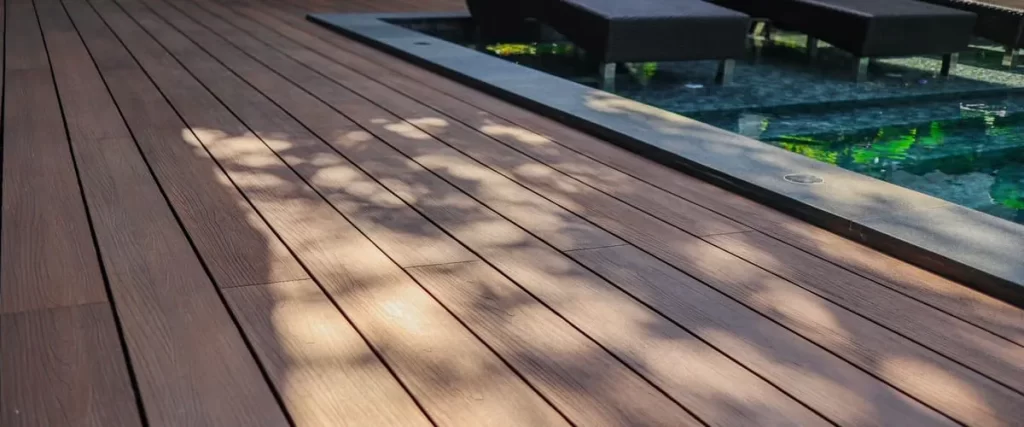
Sometimes repair costs pile up so high that replacement makes more financial sense. A new deck gives you a fresh start with modern materials and updated design.
The average cost for deck replacement ranges between $15 and $35 per square foot installed. That puts a 300 sq ft deck somewhere between $4,500 and $10,500. Labor and material costs split roughly 50/50 on most projects, though complex designs shift that balance.
Decking material choices dramatically affect your final cost. Pressure-treated lumber remains the most affordable option at $15 to $25 per square foot for a complete professionally built deck. Composite materials run $25 to $45 per square foot. PVC decking and aluminum decking occupy the premium end at $30 to $60 per square foot installed.
Material Breakdown
Different materials suit different budgets and maintenance preferences:
Pressure-treated wood offers the lowest upfront investment. These wood decks need proper maintenance, including regular staining or sealing, power washing, and eventual board replacement as pieces weather and rot. Total cost stays manageable initially, but ongoing care adds up over decades.
Composite decking costs more upfront but requires less maintenance than wooden decks. You’ll still need occasional pressure washing to remove dirt and mildew, but you won’t sand, stain, or seal. The boards resist rot and insect damage better than natural wood.
High-end materials like PVC or aluminum promise near-zero maintenance and extreme durability. These options make sense if you plan to stay in your home long-term and value the time saved on upkeading outdoor living spaces.
Custom Features That Increase Costs
Standard rectangular decks cost less than elaborate designs. Multi-level decks require additional framing, stairs between levels, and more complex structural planning. Built-in seating adds $500 to $2,000, depending on how much you want and the materials used. Built-in benches with storage underneath push costs even higher.
Integrated lighting transforms how you use your outdoor space after sunset. Basic lighting packages start around $800, while sophisticated systems with multiple zones and dimming capabilities exceed $3,000. You’ll need electrical work done to code, which means hiring licensed electricians in addition to your deck contractor.
Hot tub support requires reinforced framing to handle the significant weight. Expect to add $1,500 to $4,000 for proper structural modifications. Your local building codes will dictate specific requirements, and the local building department will want to inspect the work.
Hidden fasteners create cleaner-looking surfaces without exposed screw heads. They add about $2 to $4 per square foot to project costs but deliver a premium appearance that some homeowners really value.
Repair or Replace: Making the Decision
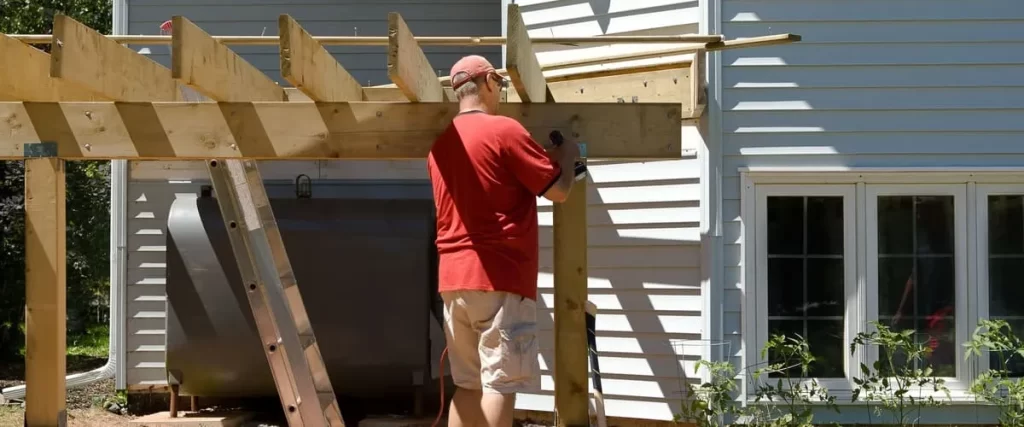
You’re staring at your old deck trying to figure out the smartest move financially.
Start by assessing the overall condition honestly. If only half the deck shows problems and the framing remains solid, targeted repairs probably make sense. When most boards look weathered, railings feel loose, and you’re spotting structural concerns underneath, replacement deserves serious consideration.
Calculate what extensive repairs would actually cost. Get estimates for fixing everything that needs attention. If that number climbs above 50% of full replacement costs, you’re often better off building new. You’ll get a warranty, updated design options, and modern materials that last longer.
Consider how long you’ll stay in the house. Planning to move within three years? Cheaper materials and targeted repairs might suffice to maintain curb appeal for sale. Staying put for a decade or more? Investing in quality replacement pays off through years of use.
The age of your existing deck matters too. A 10-year-old pressure-treated deck showing normal wear might need minor repairs and refinishing. A 20-year-old deck displaying significant rot, structural weakness, and failing connections has probably reached replacement time regardless of repair costs.
Think about your vision for the outdoor space. Maybe you’ve wanted to expand the deck, add built-in features, or switch to low-maintenance composite materials. Replacement lets you reimagine the space entirely. Repairs keep you working with what you have.
Hidden Costs to Consider
Permit fees vary by location but typically run $100 to $500 for replacement projects. Some jurisdictions require permits even for extensive repairs. Check with your local building department before starting work to avoid complications during or after the project.
Disposal costs for old deck materials add to replacement expenses. Demolition and hauling might cost $500 to $1,500 depending on deck size and contractor arrangements. Some companies include this in their quotes, while others charge separately.
Landscaping damage happens during both repair and replacement projects. Heavy equipment, material storage, and worker traffic can tear up grass and plants adjacent to the work area. Budget a few hundred dollars for landscape repairs unless you’re handy with yard work.
Code compliance upgrades sometimes surface during replacement. If your old deck predates current regulations, the new one must meet today’s standards. That might mean taller railings, different joist spacing, or upgraded ledger attachments. Your contractor should identify these requirements during the estimate phase, but they can surprise homeowners who expect simple one-to-one replacement.
Ways to Save Money Without Cutting Corners
Timing your project matters. Deck contractors often offer better rates during slower seasons, typically late fall through early spring. You’ll sacrifice some convenience by working around the weather, but the savings can reach 10-15% compared to peak summer pricing.
Material selection offers the biggest cost control opportunity. You can build a perfectly good, structurally sound deck with pressure-treated lumber for significantly less than exotic hardwoods or premium composites. Save fancy materials for highly visible areas and use cheaper materials where they won’t show.
Handling the demo yourself reduces labor costs if you have the time and physical capability. Tearing off old decking, removing railings, and hauling debris aren’t skilled tasks. Most homeowners can manage this work with basic tools and a strong back.
Keep the footprint and design simple. Every angle, level change, and custom feature increases both labor and material costs. Rectangular decks built at a single height minimize waste and construction time.
Getting Accurate Estimates
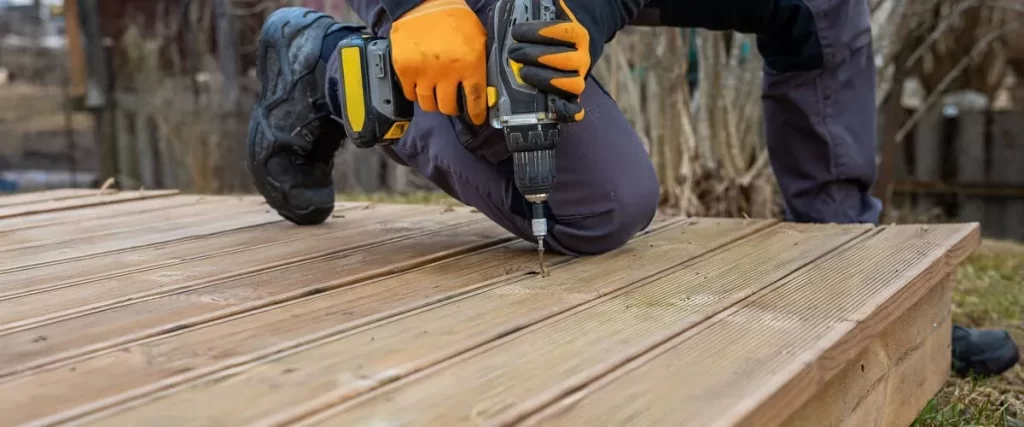
Request quotes from at least three deck contractors to understand the market rate in your area. Detailed estimates should break down labor costs, material costs, and any additional costs like permits or disposal fees. The final cost depends on many variables, so vague estimates rarely hold up once work begins.
Ask about warranties on both labor and materials. Reputable contractors stand behind their work, typically offering at least a one-year labor warranty. Material warranties vary by product but can extend 10-25 years for quality decking.
Verify licensing and insurance before hiring anyone. Check credentials through your state’s licensing board or consumer protection agency. In North Carolina, the NC Licensing Board for General Contractors maintains records you can search online to verify contractor credentials and check for complaints.
Letting Someone Else Handle the Headaches
You’ve read through cost ranges, material options, and decision factors. Maybe you’re feeling informed, or maybe you’re realizing how many variables affect the final outcome.
Deck repair projects involve real complexity beyond the visible surface. Structural calculations, local code compliance, proper flashing and waterproofing, fastener selection, and countless details determine whether your investment lasts five years or thirty. Getting it wrong costs more than getting it right the first time.
Professional contractors handle permitting, manage material procurement, schedule inspections, and warrant their work. They’ve solved the problems that only emerge once you’re mid-project and can’t easily back out.
If you’re weighing repair versus replacement, dealing with structural concerns, or just want your outdoor living space functional again without the stress of managing it yourself, we’d like to help. Call us at (919) 638-0986 or message us here to discuss your specific situation and get a clear picture of what you’re actually looking at cost-wise.